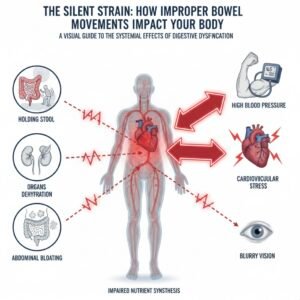
In the wellness space, we often focus on “gut health” as a matter of microbiome or bloating. However, the physiological reality is much more interconnected. Improper bowel movements—characterized by chronic “straining” or holding—trigger a cascade of events known as The Silent Strain.
Here is the clinical breakdown of how digestive dysfunction migrates from the colon to the rest of the body:
1. The Hemodynamic Impact: Blood Pressure & Heart Stress
The infographic highlights High Blood Pressure and Cardiovascular Stress. This is largely due to the Valsalva Maneuver—the act of straining against a closed airway.
• The Spike: Intense straining causes a rapid increase in intrathoracic and intra-abdominal pressure.
• The Strain: This reduces venous return to the heart, followed by a compensatory surge in blood pressure that puts immense pressure on arterial walls. Over time, this “silent strain” contributes to long-term cardiovascular fatigue.
2. Organ Dehydration & Fluid Imbalance
The colon is the body’s primary site for water reabsorption. When stool is held too long (Holding Stool), the colon over-extracts water, leading to hard stools and systemic Organ Dehydration. This forces the kidneys to work harder to maintain electrolyte balance, creating a cycle of metabolic stress.
3. Impaired Nutrient Synthesis & Energy
Digestion is not just about breaking down food; it is about Nutrient Synthesis.
• When transit time is slowed, the fermentation of undigested matter produces gases (leading to Abdominal Bloating).
• This environment inhibits the synthesis of essential B vitamins and the absorption of electrolytes, leading to the “brain fog” and Blurry Vision mentioned in the diagram—often a result of fluctuating blood sugar and micronutrient deficiencies.
4. The Visual Connection: Why “Blurry Vision”?
It may seem unrelated, but the eyes are highly sensitive to vascular changes. Chronic digestive strain can lead to:
• Intraocular pressure spikes during episodes of straining.
• Systemic Inflammation: Chronic constipation triggers an immune response that can manifest as inflammation in the small capillaries of the eyes.
Digestive health is a leading indicator of cardiovascular resilience. If we ignore “the silent strain,” we aren’t just risking discomfort; we are placing a measurable burden on the heart, kidneys, and nervous system.
Is it time to look at digestive regularity as a vital sign for heart health?